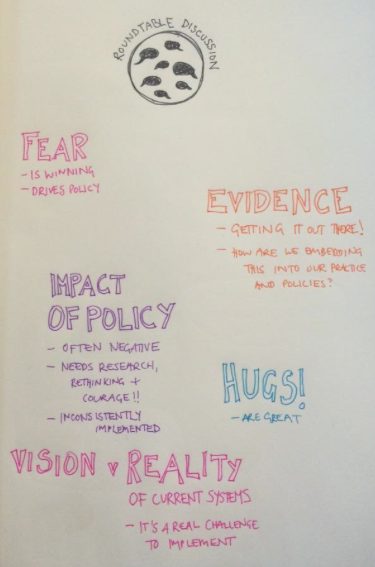
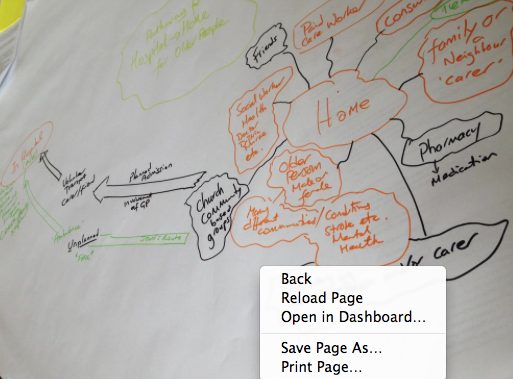
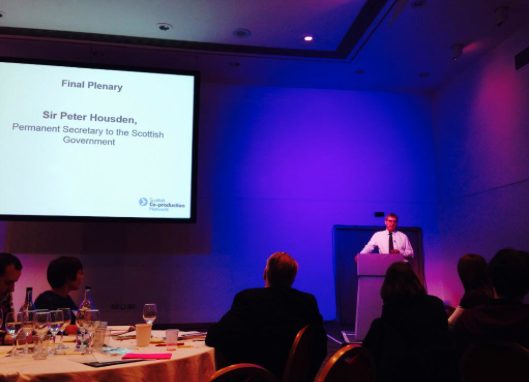
Danielle Kelly, a researcher at Yunus Centre on the MRC funded Common Health project recently attended an Iriss workshop I ran at the Scottish Co-Production Network Event – Co-production: Making it Happen.
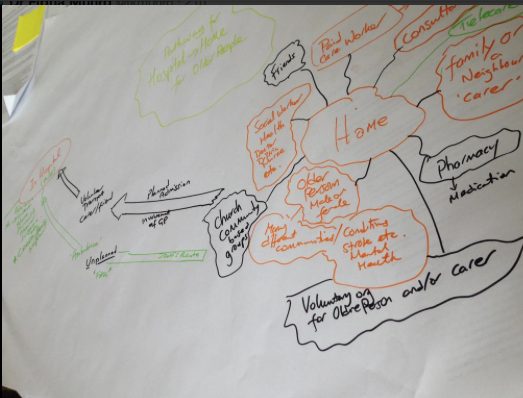
During this workshop, I took participants through a series of design tools and activities that I’d developed as part of Iriss’s Hospital to Home project. These tools were specifically designed to support a co-design process in which a range of people come together to tackle service problems.
Partly inspired by this workshop, Danielle wrote a post for the Common Health Researchers blog. Please read this below.
—
Last week’s blog looked at the relationship between art and social enterprise, and what particularly stood out to me was the idea that art can facilitate community expression.
 As academic researchers we may strive to collect information from communities that can be objectified and rationalised, using mediums like interviews, focus groups, or perhaps even a bit of participant observation. The community talks to us, we write it down, then we display this in fancy reports or papers for peer reviewed journals in our quest for institutional credibility. However, the combined effort of using big long words and academic jargon can serve to isolate the very population we may be looking at, and they may be left feeling underrepresented by our own bias. This leaves us asking how we can fully represent communities through our outputs, and who is this for? This is a conversation that keeps springing up between Yunus Centre staff, most recently at the Unusual Suspects Festival and our CommonHealth Knowledge Exchange event.
The CommonHealth projects Growth at the Edge and Age Unlimited will both be applying participatory research approaches (design thinking and action research) to measure the effects that social enterprises can have on health and wellbeing. This will allow the research to be guided by the individuals and communities that we will be working with. In using such approaches we hope to potentially encourage creative thinking and the collection of data and documentation using non-conventional visual models, such as drawing, mapping, photography, and maybe even sculpting things out of plasticine, who knows?! Yet this will be ultimately up to the communities themselves to explore the most appropriate ways to express themselves and communicate with the research team. Of course we will be using interviews and focus groups to provide further data, but one of the most important things is to find ways to incorporate the visual outputs from the community members themselves into our findings.
Some social enterprises in the Highlands of Islands of Scotland, like ATLAS Arts in Skye, exist to allow community members to create art pieces that represent their landscape, histories and traditions. These visual art projects are used as a form of individual expression, and represent a persons’ subjective understanding of their culture and the world around them. Therefore in researching the people within such social enterprises, surely we need to utilise the visual artwork they have produced as ways of understanding their culture and context.
This got me thinking about how we can possibly analyse and disseminate the visual data we may collect. Ethnographers have faced this problem for decades of how to understand and aesthetically interpret tangible documents and art pieces to understand the culture from which they emerged. Visual anthropologists use methods of collecting cultural artefacts such as photographs, films, artwork and sculptures and then allow individuals from that particular society to both describe them and place them within history. This may still be viewed as pretty niche in academia, yet we could learn a few lessons from this approach on a wider level.
In terms of dissemination, it may be questionable whether visual arts have a place in academic conferences, perhaps displayed as ‘pretty posters’ alongside theoretical case studies and novel ground-breaking policy contributions? But this could just serve to further isolate research participants from their outputs. Or should we encourage community members to organise their own events that display the visual arts they produced within research projects, with academics in attendance? Hopefully our own CommonHealth Knowledge Exchange events will encompass this viewpoint going forward.
In terms of my own participatory study and the use of action research, my view is very much that we must work with communities not on them, so in fully engaging with individuals their problems become our problems. This goes all the way to research outputs; my papers become our papers, in the same way their art becomes our art.
—
Thanks, Fiona


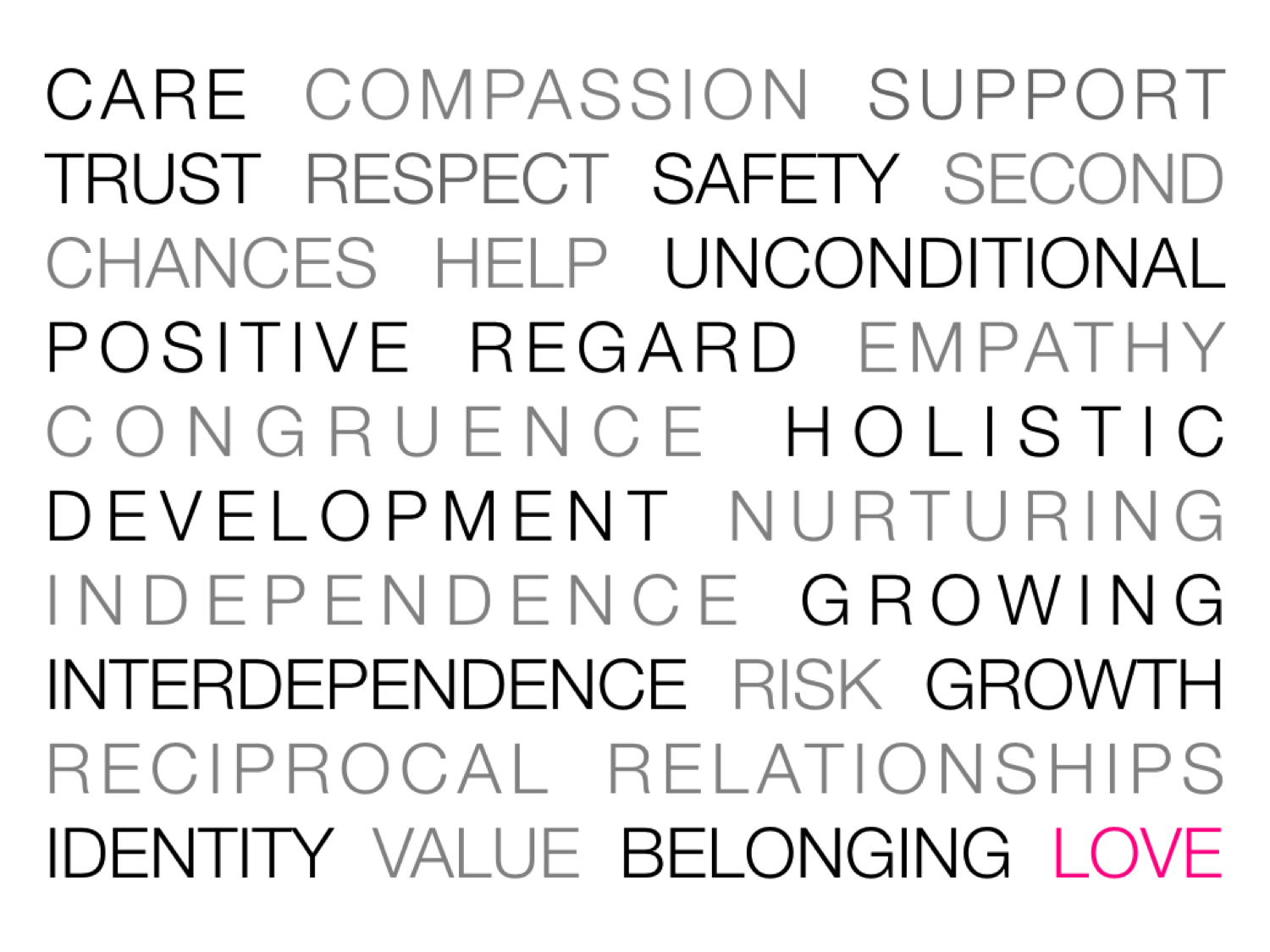









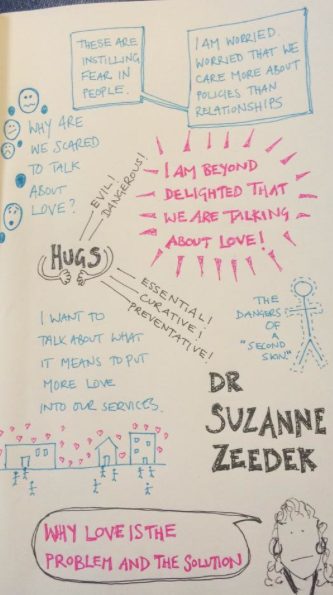 This presentation was genuinely one of the most moving presentations I’ve seen and I’m sure I wasn’t alone with many people wiping their eyes throughout.