Generations together…

Hello there folks. It has been a while (16 months) since we last posted from this blog – but sometimes it takes a while for mighty oaks to grow from tiny acorns!

Our last post highlighted that we were working together with the Glasgow School of Art to develop new and innovative approaches to meet the social, economic and environmental difficulties we are currently facing around reshaping care for older people. Since then, we’ve seen the innovation in this sector developing rapidly. Responses have been emerging from across the public, private and voluntary and community sectors. Frequently, these innovations have involved new technologies or making better use of previously under-utilised assets and resources. And these innovations are not all small (or tiny, to use the previous analogy!).

When we left you last, the ideas that had been developed between people who use services, practitioners and design students, had been showcased and received well at the IRISS forum.  However,  we weren’t sure who/how/when they would be taken forward.

We are delighted to tell you that since those early stages, two of the ideas developed through the project have been taken up and developed by different partnerships in the local area.

  • The Hub (idea originally developed by the partnership working and communications team) has been taken forward by Cornerstone Care (blog post to follow) and,
  • Intergenerational work (idea originally developed by the anticipatory care team), which will be the focus of this blog.

Generations together…

In partnership, a group of staff (comprising the Health Improvement Team, social work and NHS) approached Blackfriers Primary School in the Gorbals to set up a pilot initiative that would bring generations together. The programme is in the early stages of design, but has the aim of improving perceptions and challenging stereotypes, and the overall programme will be co-produced by the children and older people.

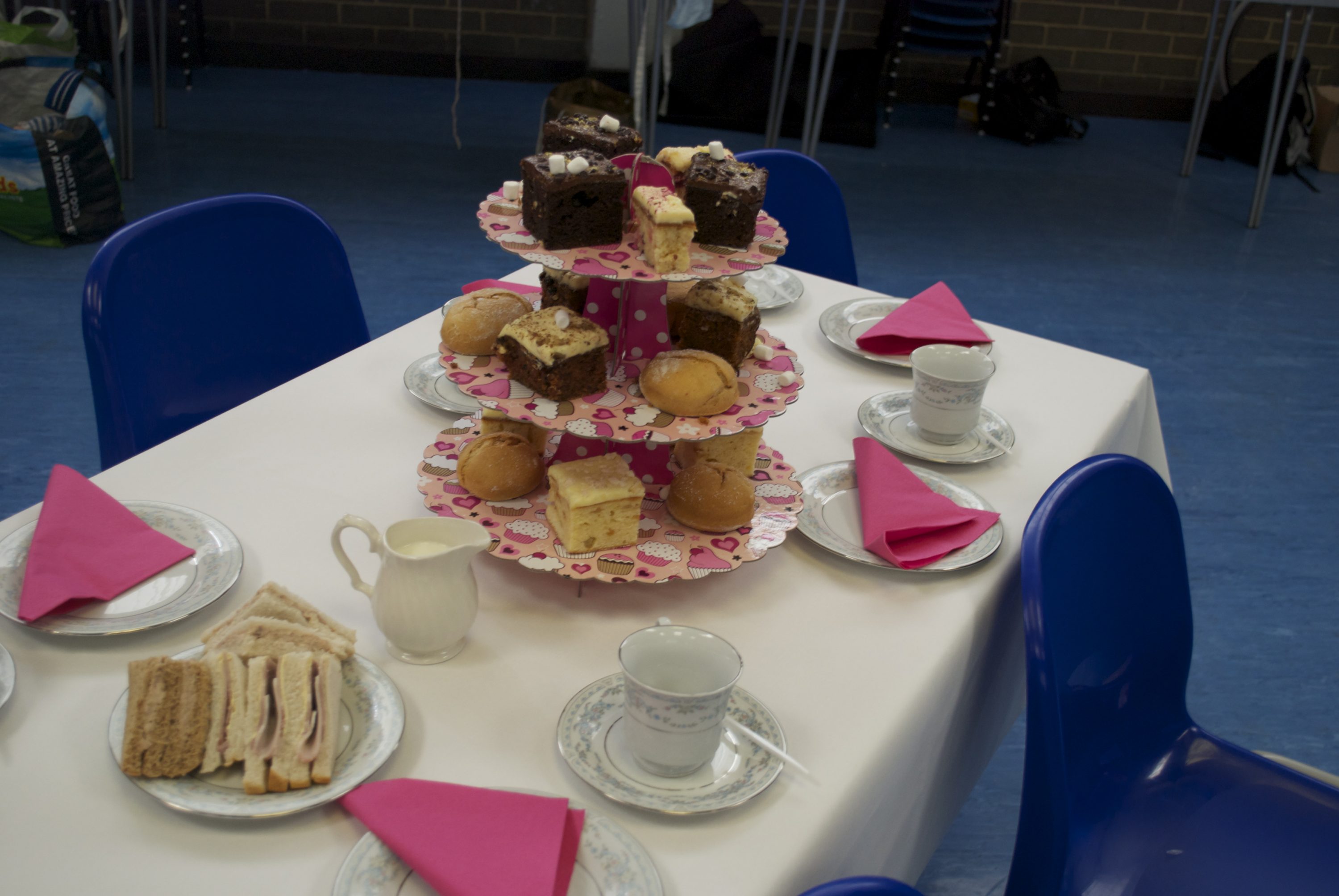
Monday 20th May, saw the launch of this programme. Attended by over 80 older people, carers, grandparents and parents and the children from primary 1 and primary 7 from Blackfriars school, there was a buzz in the air, song in our hearts and plenty of cake to go around (just!)

Headteacher introduced the day, and welcomed everyone to the school. She explained that she wanted the school to embrace everyone in the community and that the children wanted to open up a new onversation with the older members of the community.

To get everyone in the mood, the children from Primary 1 sang a song to welcome everyone together. Then, children from Primary 7 performed and sang along to the sounds of the sixties – treating the group to a trip down memory lane. There was laughter, cheers, signing and dancing from audience – true audience participation!

Then, the children and older people had a chance to get better acquainted. We had borrowed some ‘Reminiscence Kits‘ from the Open Museum to help stimulate conversation – as well as games and toys from Playbusters. There was soon lots of chatter, laughter and discussion. We then asked the group to answer the following questions:

- what interests or skills could you share with older/younger people?
- what would you like to learn from older/younger people?
- what would you like to do for a project?
- would you like to participate in the project
- what benefits do you feel you would gain from participating in the project?

The answers were varied! People wanted to share skills and experiences from old Glasgow street songs, to rap, dancing, self-care to computer and technology skills. So, we’ve lots to work with! The next stage of the process will be to analyse the different skills and activities that people have and are interested in and to match them up. Overall, there was encouraging enthusiasm and willingness from the children and older people to learn and do things together.

What we are beginning to see is that the process of developing this idea is just as important as the final outcome. These processes have the capacity to create new roles and relationships, develop assets and capabilities and/or better use assets and resources.

Here are some comments from the evaluation forms:
I learned:
“that I belong to a whole community”
“that the children are as enthusiastic as I am”
“rather than learn, I was reminded of lots of things I had forgotten”
“that kids enjoyed joining in with older people”
More photographs from the day available here: http://www.flickr.com/photos/openlx/sets/72157633528622735/
Thanks to all those who helped to organise, get involved and make the day a success. In particular, thanks to all the children at Blackfriars Primary School, the older people who attended, Dixon Carer’s Centre and the organising committee (Victoria McAlpine, Mrs McCleary, Mrs Collins and Rhoda MacLeod).

Student Presentations 14/11

Presentation of concepts – fleshing out and refining

In the intervening two weeks the students and their practitioner counter-parts have been refining their ideas, better understanding how they might be implemented, and testing out the viability of their concepts in the south side of Glasgow.

Monday was the student’s last opportunity to present formally to both people who use services and practitioners and to get relevant feedback on the concepts that respond to the project themes. This took place at the Dixon Community Centre on Cathcart Road to make it more likely that older people and their carers could share their thoughts, ideas and perspectives on the concepts. We also changed the timings of the presentation from a full day to an afternoon as we received feedback that it can be difficult for practitioners to negotiate Monday morning sessions.

The presentations

On the day 5 practitioners and 23 older people/carers were able to attend. Although the change of venue was aimed to integrate and include older people and carers views we learned very quickly that the formal presentation format we have been using each week wasn’t working in the hall due to the acoustics in the venue. In order to remedy this, we changed the format asking the students at very short notice to present (in rotation) to small groups of people who had attended. Although the noise level was still difficult to control, people were able to converse and hear better which afforded the students constructive feedback from those in each of the groups.

Anticipatory Care

The anticipatory care team have taken a different view of ‘anticipatory care’ and have defined the difference between ‘prevent’ and ‘anticipate’. Their idea takes a very broad view of anticipation that focuses on increasing awareness of ‘older life’ in younger and middle aged people.

Essentially, the approach is an inter-generational one, which aims to innovate policy as well as make practical changes on the ground in the local context. The crux of the idea is using schools as a place for meeting and introducing the topic of older life, to break down preconceived judgments and allowing young and older people to begin to associate one with another. This would be implemented through the Curriculum for Excellence and carried on into high school and university – with the range of activities being undertaken changing to suit ages and interests.

The idea is to create a partnership between schools and elderly community centres/projects, as a starting point to build values of respect and empathy in the community, as well as awareness of different health related issues.

The students have effectively linked their idea in to current policy areas including curriculum for excellence, prevention, education and community development. In addition, the idea also links in to what currently exists locally and seeks to complement it by making enhancements.

Partnership working and communication

This team has been working on their location based ‘hub’ idea which received positive feedback from the last session.

The hub idea is centred around the idea of peer to peer learning and support, based on the idea that people are experts in their own lives and that the collective knowledge of a community is a large untapped resource. Based within the hub is the ‘service expert’. This individual would be someone who acts as a first point of contact into the system – representing both health and social care. They are able to fulfill a number of different roles including making appointments, helping individuals to complete forms and also giving general advice and guidance.

However the key to the hub idea is that it is first and foremost it is an important part of the community providing services such as a post office, toilet facilities, pharmacy etc (a place to go for pensions, benefits and prescriptions). Its secondary role is as a base for well-being services and contact with the service expert.

The team has developed a manifesto and physical model to showcase their idea and are in the process of developing a business plan to accompany it – based on a social enterprise model.

Social Isolation

This team has come a long way since the last presentation – really beginning to drill down into the type of isolation that older people might experience.

Much of the teams thinking is based on their knowledge of different cultures as well as looking at historically how people used to have a sense of community cohesiveness and interest in one another. As such, the challenge for this group is to devise something that is implicit in its approach i.e. it doesn’t explicitly try to integrate people more into the community or activities, but rather, softly approaches the idea of linking people into areas of interest.

The idea being developed in this group is around the role of a community champion. The community champion would be someone who acts like a neighbour by looking out for older people in the community as well as informing the older people about different activities that are going on. The idea being developed was about this specific role, but also complementary tools that the individual would be able to use within that role.

For instance, the team had considered developing a database (that would be owned by the community) that would list the different resources, services and activities that were ongoing in the community. This could be used by the community champion (and others) as a signposting tool. This idea was really positively received by the group of older people and their carers – many of them commenting that it would be very useful to have access to a one-stop-shop of information about whats on in the local area. The focus group also gave the students a chance to talk to some real-life community connectors (!) and to focus their attention on the types of information they supply, how they get access to it, and how they transmit it to others.

The group still has to make some decisions about whether or not this role is volunteer based, or is paid for. Also, they are going to consider the type of skills, knowledge and aptitudes that the ideal community champion should possess.

Reablement

The reablement group had various different concepts that they represented two weeks ago and since then have narrowed these down to focus upon the idea of a reablement buddy. After looking at Edinburgh City Council’s review of reablement services as a basis for their ideas they are aiming to share the experience of someone who has  been through a service with someone who is about to enter a service; similar to ideas on the ALISS project and the Me2 concept from RED ‘s Diabetes project). However this group are still working out how this might work out in the South side of Glasgow – would it be a volunteer service? How would people be checked to make sure they wanted to support someone else  rather than talk about their own experience?

Interestingly the debate in this group between practitioners and cares was interesting. Practitioners wanted to make sure the buddies would have all the information and knowledge they needed to support a person, however the carers view was that a personal experience can be enough, and as well as learning from another experience of a service and navigating through it, it may possibly not not be as intimidating as a professional contact. Two different interpretations of who who is the ‘expert’ and how these perspectives could work together to better support someone.

One of the key points made by carers in this group was people ability to get to services or to other people as transportation can be difficult whilst in the process of enabling oneself.

Reflections

Overall, the feedback was positive for each of the concepts. Where views differed the conversation constructively contextualised the ideas to the South side of Glasgow, current experiences of services or how services are provided.

The teams have come a long way in terms of their understanding and vision, which really must be commended, given the tight time frame, new social and health sector learning as well as contextualising this within Glasgow. What is left now is to drill down into the ideas with specifics about how these concepts could be taken forward in practice – some of the teams are already underway with this task.

What I like is that the ideas build on one another and are complementary with the teams referencing ideas from other teams within their own concepts. Hopefully, this will mean that a comprehensive picture can be created for Glasgow south. Very much looking forward to seeing what comes next.

In terms of our reflections about the project, there are definitely things that we might have done differently with the benefit of hindsight. A future blog to come on this, detailing the benefits and challenges of undertaking a project such as this with some insights as to what the lessons IRISS have learned as facilitators.

Thanks

We’d just like to extend an extra thank you to our friends at Dixon Community Centre for the use of their venue, hospitality and all-round helpfulness. Also, we realise that it can be difficult to take time out of the caring role to attend events like these, and we really are thankful to all of the carers and older people who took time out of their day to help us with the project – your time, patience, sensitivity and sense of humour are much appreciated. The project would have far less meaning without your involvement.

Scottish Older People’s Assembly – debating key issues

Thought those who are following the blog maybe interested in this…

The Scottish Older People’s Assembly is a one-day conference is for older people and their representatives from across Scotland to debate key issues including active ageing, pensions and personal finance and reshaping care for older people.

The conference was webcast on 25th October 2011, this video includes presentations from Highland Senior Citizens’ Network and Dumfries & Galloway Seniors Forum plus a link to older people from House in the Park care complex in Hamburg, Germany as well as the main speaker Nicola Sturgeon MSP and Steve Webb, Minister of State for Pensions, speaking live from Westminster.

“…there will also be a written report to go to Scottish Government…”

http://twitter.com/#!/SOPA_2011

Meeting at the Nan MacKay Centre

Today a group of students and I set off to meet with a group of older people who regularly attend the Nan MacKay Memorial Centre in Pollocksheilds.

The centre is tucked away at the end of St John’s Road – and was set up after one of the original tenants to move into the area, Nan, realised that many of the tenants were lonely and elderly and that the new council estate did not have a lot to offer.

With help from other enthusiastic residents, Nan went on to organise trips, parties and eventually started a campaign for a Hall. The hall has now been running for 30 years, continuing to serve older people and arranging a variety of daily activities.

We arrived at the centre at 9.30, just as the art class was about to start. As well as talking to the older people there about their lives, we were able to get a better feel for the centre and its importance to the local community. It was great to meet the people who were at the centre today – many of them commented that they’d be lost without such handy community facilities and many of them attended over 3 times a week.

We have been encouraging the students to take a more posivitist approach to their service design and this was a useful opportunity for them to learn from an example that is working well, where people are happy and content – rather than focusing on issues that need to be fixed.

Also, the older people that attended are fit, well and independent and commented that they often participated in the activities for the social rewards of engagement in that activity, rather than for its own sake. As such I reflected that we might begin to think about different strategies for promoting healthy activities and keeping people well/ independent that might use this social element as a hook.

Among other things, it was clear from today that:
• On the whole, ageing is a positive experience for the majority of people
• The majority of people did not think of themselves as old.
• Future health status seems to be the most important concern

All comments and thoughts welcome.

Summary of presentations – 17/10/11

Summary of the day

Practitioners said that the design students had a really good grasp of the issues, services, sectors and people’s experiences and there was a great deal of healthy discussion and debate after the presentations. Things for the students to think about for the next presentation included finding out more information about financial, experiential and practical possibilities with their design ideas, as well as looking at research and evidence sources to validate their ideas.

Between now and the next presentations on 31st October each group is going to:

- Focus on a specific area in their theme.
- Start thinking about ‘what if’ this, or that, was introduced into current systems, visualise this and share it with practitioners, older people and carers to get feedback.
- Speak to a GP to include this perspective in their research.
- Bring in their knowledge about how older people are cared for in other countries (over half of the students are from overseas).

If older people or carers would like to attend the presentations on 31st October and 14th/28th November, please get in contact with Gayle Rice or Lisa Pattoni at IRISS on 0141 559 5059.

What’s it like to be involved in the project?

Throughout the project we’ll be capturing participant’s views about what it is like to be involved, what they are learning, and what should happen going forward. We’ve created a custom vimeo channel for this – you can subscribe here: http://vimeo.com/channels/reshapingcare

For a sneaky peak – here are a few of the interviews we’ve completed so far…

Interview with Anne Scott:

Interview with Kathleen Kerrie:

Interview with Eric Boslem:

Anticipatory Care team

Health is one of the big challenges we face in our society.
By meeting the service providers but also the older people and their carers, we realized that there was a real stake in this project. Both students and professionals are really involved and both hope for a better future.

Simple games and questions about everyday life helped us to engage with the older people and to exchange lots of ideas during the workshop last wednesday. Our deduction was quite simple : older people aren’t different ! For the majority of them, what they find the most important thing is continuing doing the very basics : talking, cooking, eating, walking, reading, sleeping… They all have their own preferences wether it be traveling, knitting, playing music, going to the cinema etc…
But this all gets complicated as they get ill, sometimes in a very unexpected way. All of a sudden, they have to deal at the same time with carers, volunteers, social care, health care, their family, and they feel lost, torn between their private life and their health.

In our society, aging is regarded as something unpleasant, we don’t want to get old. Getting frail and dependent is not “fun”. Instead of thinking about our future, we tend to forget it, to defeating age and put off this question until later. And because of this, there is a lack of preparation : we don’t plan ahead, we don’t deal with health in advance.

In a conversation with representatives from the social and health care departments we figured out that one of the main points of “anticipatory care” should actually be about stoping admissions to hospital, since this is often crucial for older people.
But we also have to see what else is related to health and to the different stages of life and what actually prepares you to get older.
We have to take into consideration our education, the informations around us, and everything else that could foster us to act in advance.

Also one important aspect is that they have the ability of taking decisions by themselves, taking risks and be aware of them. Knowing what is good for them and what they need to keep fit. It’s important for them to continuing being involved in the community and have the feeling of fulfillment.
We have to focus on how do they fit into society, what do they take and what do they give, what can we all learn from them and vice-versa. Their contribution is a key point to afford older people having a good older life and enjoying their later years.

Putting People at the Centre

IRISS very much tires to encourage working in partnership with people – placing those who use services at the centre of design of services and support.

Co-production is a way to describe this way of working where service providers and users can work together to create something sustainable that works for them all. The approach is value-driven and built on the principle that those who are affected by a service are best placed to help design it.

In order to ensure that the voice of older people and their carers is heard throughout this project we arranged for the teams to meet up with a large group (33 people) of older people and their carers at the Victory Church Centre in Govan on Wednesday.

At this event, we handed the agenda over to the students who worked in their themed groups and who brought a range of tools and ideas to use to engage with people. The older people and their carers brought a fantastic sense of humour, energy and willingness to share (for which we are incredibly grateful!). Bringing older and younger people together in purposeful, mutually beneficial activities helped to promote greater understanding and respect between the groups.

The students took away a lot of knowledge of information and really learned from the wealth of experience that was in the room. The exposure to a range of different people and perspectives and thinking about how to mediate the differences between these engagements has made for an intense few days for the teams; but there is definitely a sense of momentum for the project going forward.

From my point of view, what was wonderful, was to see the little buds of relationships beginning to form between people as discussions progressed. Many of the participants agreed to follow up their conversations with the students after the session, and lots of people committed to coming along to the student presentations (critical assessments).

The students will be documenting their interactions – including where they’ve been, what they’ve done and seen, and their reflections on this blog.  IRISS is providing some evidence support to the students throughout the project, but the teams would would welcome any suggestions, points of interest and ideas etc from any blog readers. Feel free to share any nuggets of information here.

Many thanks to the three carers centres in the south of Glasgow who helped spread the word about the event: Greater Pollock Carers Centre (Princes Royal Trust), South East Carers Centre (The Dixon Community) and  Glasgow South West Carers Centre (Quarriers).

Future Choreography of Care and Support Project Launch!

Today, in a beautiful building in the south side of Glasgow, 15 practitioners working with older people from across the social services, and 20 students from the Glasgow School of Art came together to begin to think about reshaping the future choreography of care and support for older people in Glasgow South.

This work aims to complement that of the Reshaping Care for Older People agenda and is all about empowering practitioners to come together, to think about the services that they provide differently and to come up with new ideas and ways of working that might provide better outcomes for the people receiving support in this area. Practitioners were from social work services, health, the private sector (Bupa care home) and the voluntary sector (Cornerstone Care).

The new ideas bit, is where the students come in to lend a hand. The 20 students, in their third year at the art school, are busy honing their service design skills and are bringing with them fresh perspectives, creative skills and visualizing capacity. Throughout this project we hope to marry the innovation that is already happening on the front line, with the new tools and methods of service design to help the practitioners work in partnership to develop ideas for the future.

We’ll also be introducing the students to older people and their carers so that they can get a better picture of their lives from their perspective (more about that on Wednesday), and to ensure that anything that is produced through the project is truly co-produced.

The Launch

Today marked the start of a 7 week project, where these participants will be coming together in 4 teams to focus on the following themes:

  • reablement
  • partnership working and communications
  • anticipatory care – specifically non-admittence to hospital
  • social isolation

We spent time today splitting the students and practitioners into groups, ensuring there was an even spread of experience across each team. Getting to know each other, making sure everyone was on an equal platform, and introducing some of the issues that practitioners are facing was the order of the day.

We presented the policy direction and ethos of the project to the students and asked each team to consider their given theme and to discuss their commitment to the project and the types of elements that they’d like to explore. The commitments were as follows:

1. committed to thinking about partnerships with clients and familes and communicating well with family members

2. committed to the priority of maintaining the couple’s independence and protecting the individual’s right to make choices and to be heard

3. committed to assessing the needs of both the carer and the service user, promoting their indpendence but also increasing their awareness of their options.

4. committed to listening to people and considering the person as an individual (removing any labels) and working together to shape the care and support that the person receives.

After lunch, we gave the teams time to consider the practicalities of how they wanted to go forward as a group, as well as thinking about potential site visits, and information requests. We then all discussed each of the approaches as a group. These were as follows:

Anticipatory Care Team

This team is thinking about how the students will integrate into each of the different sites. They have decided that one student will visit the Bupa care home at a time (to ensure that this does not become overwhelming for the residents). The rest of the students will visit Elder Park (health setting) and Langton Road (social work setting), whilst coordinating this through telephone and email.

Communication and Partnership working Team

This team has decided to create a blog and a facebook group so that they can share ideas readily with each of the other team members (more information on this soon). They want to learn a bit more and get some more information before coming back together as a group – planning to look at the whole process and how each of the different sectors interact with one another.

Reablement Team

This team are planning to meet to create a map of all the different services that exist locally for older people – from a reablement perspective. They also will plan to make visits to the different workplaces. The students and practitioners have given each other homework (!) – each group identifying what they would like to know about the other, as well as becoming clear on the expectations of what they can deliver as a group.

Social Isolation Team

This team will be meeting tomorrow at social work premises to get a better feel for this type of role and the responsibilities that come with it. This will include looking more closely at individual rights, assessments and meeting needs. The students will then be invited to the other settings to get a grasp of things from their perspectives.

What’s next?

Over the next seven weeks the teams will have the opportunity to meet with different groups of older people and their carers, visit different work settings and ask lots and lots of questions as the basis for developing ideas as a team. These ideas will be consistently subject to refinement following group sessions where all project participants come together to get feedback on their ideas.

The teams will be posting up discussion about what has happened including their thoughts, ideas and processes to this blog so keep your eyes peeled for more information soon…. We are really pleased with the start of the project and are excited to see what will happen throughout the seven weeks!

All comments welcome.

*IRISS would like to thank our partner organisations NHS Education for Scotland (NES) and the Scottish Social Services Council (SSSC) for allowing us use of elements from their ‘Sliding doors to Personal Futures’ events. The SSSC and NES are taking forward the workforce agenda part of the Reshaping Care for Older People programme; looking at the kind of workforce we will need in the future, the skills workers will need and how to support future learning.