Supermarkets, communities, care and the way forward

I came across an article in today’s Guardian outlining a project in London where Sainsbury’s supermarket staff (pharmacists and other workers) are being coached to identify ‘hidden carers’ who look after elderly or sick relatives and neighbours without financial, emotional and practical support.

Further, I went on to read that the scheme links into Ministerial promises to ensure that family carers get a better deal. They are also promoting the idea of “carer champions” for GP surgeries to ensure that practices are more aware of family circumstances without breaching confidentiality.

These approaches are in line with, and are rather similar to, the community capacity building approaches devised by the students in the Choreography of Care project that were showcased on 6th December at the IRISS forum.

Similar to the preventative approach being taken by Sainsbury’s, the ideas produced by the students also see the world through a community lens. This means that services are necessarily configured around the user, not the institutions into which they are forced to fit.

The subtlety that is implied by all of the ideas is also inherently different from many of the traditional approaches to the design of care and support. These approaches understand that people will only feel empowered to participate in the uptake of a new service if it speaks to them in a language that they understand, in a style that is found to be friendly and appealing, and in a way that fits neatly into their regular patterns of behaviour. The partnership working and communications team has recognized this in their ‘Hub’ concept, which integrates local amenities with health and well-being advice.

Within health, the emphasis on the community takes on particular importance. There is increasing evidence that chronic illness is strongly related to networks and communities. Well-being is particularly dependent upon relationships (see: Wistow 2004, Layard 2003 and Foot and Hopkins 2010). The social isolation team’s concept of community champions and building community cohesiveness really builds on this evidence.

The stakeholders in Glasgow South were particularly pleased with the concepts that were developed – specifically around establishing relationships where there had been limited contact, as well as bringing some enthusiasm and creativity to the process for practitioners.

IRISS are now discussing the implementation of the approaches to include the following activities:

·      IRISS will facilitate a forum with the practitioners and front line managers involved in the project to discuss the feedback at the event on 6 December. The outcome would be an agreed strategy to progress the ideas to implementation (proposed meeting 2nd week in January).

·       A local event in the South for the key stakeholders involved in the project, along with the students, to showcase the findings from the project to the wider group and community (proposed event in February).

·      The Adult Local Implementation Group will be the key sponsors for the progress of a local implementation plan to support the agreed actions following the consultation and approval process across the wider reshaping care agenda.

Leave a Reply

Your email address will not be published. Required fields are marked *

*

You may use these HTML tags and attributes: <a href="" title=""> <abbr title=""> <acronym title=""> <b> <blockquote cite=""> <cite> <code> <del datetime=""> <em> <i> <q cite=""> <strike> <strong>

Supplementary information about each idea

Each of the groups developed a wealth of work and knowledge through the 7 weeks they worked on this project. They are not able to communicate this in a 10 minute presentation so to share their knowledge and process of working they have created supplementary information about each idea and how it was generated. You can find this information in the files below:

Leave a Reply

Your email address will not be published. Required fields are marked *

*

You may use these HTML tags and attributes: <a href="" title=""> <abbr title=""> <acronym title=""> <b> <blockquote cite=""> <cite> <code> <del datetime=""> <em> <i> <q cite=""> <strike> <strong>

Student presentations 29/11

Yesterday the students presented their ideas in their finality to the practitioners and others from the sector that attended. This was an opportunity for the students to trail their presentations before they meet a larger audience at the IRISS Forum and also to receive feedback on these ideas and how they have fleshed them out with relevance to the South side of Glasgow and the communities there.

We won’t go into too much detail about the presentations here as it will be a spoiler for the presentation next Tuesday – suffice to say there will be a live blog following the presentations and the presentation will be made available online – address to follow after Tuesday.

Thanks to the students who have had a difficult task, not only in understanding their theme, getting to grips with the local context but also for trying to integrate the information from four different sectors who think about care and support quite differently from one another. No mean feat!

The ideas that were created have been grounded in the research that they’ve undertaken with older people, carers and practitioners. They seek to complement the other work going on locally, linking in to what already exists to make their implementation more viable.

Leave a Reply

Your email address will not be published. Required fields are marked *

*

You may use these HTML tags and attributes: <a href="" title=""> <abbr title=""> <acronym title=""> <b> <blockquote cite=""> <cite> <code> <del datetime=""> <em> <i> <q cite=""> <strike> <strong>

2 thoughts on “14/11 Social Isolation Presentation

  1. Congratulations on an enormously impressive, in-depth piece of research and valuable insights. Loved the idea of a community champion! I only wish I’d been able to hear your presentation as well as see it: was anything recorded at the event?

Leave a Reply

Your email address will not be published. Required fields are marked *

*

You may use these HTML tags and attributes: <a href="" title=""> <abbr title=""> <acronym title=""> <b> <blockquote cite=""> <cite> <code> <del datetime=""> <em> <i> <q cite=""> <strike> <strong>

Student Presentations 14/11

Presentation of concepts – fleshing out and refining

In the intervening two weeks the students and their practitioner counter-parts have been refining their ideas, better understanding how they might be implemented, and testing out the viability of their concepts in the south side of Glasgow.

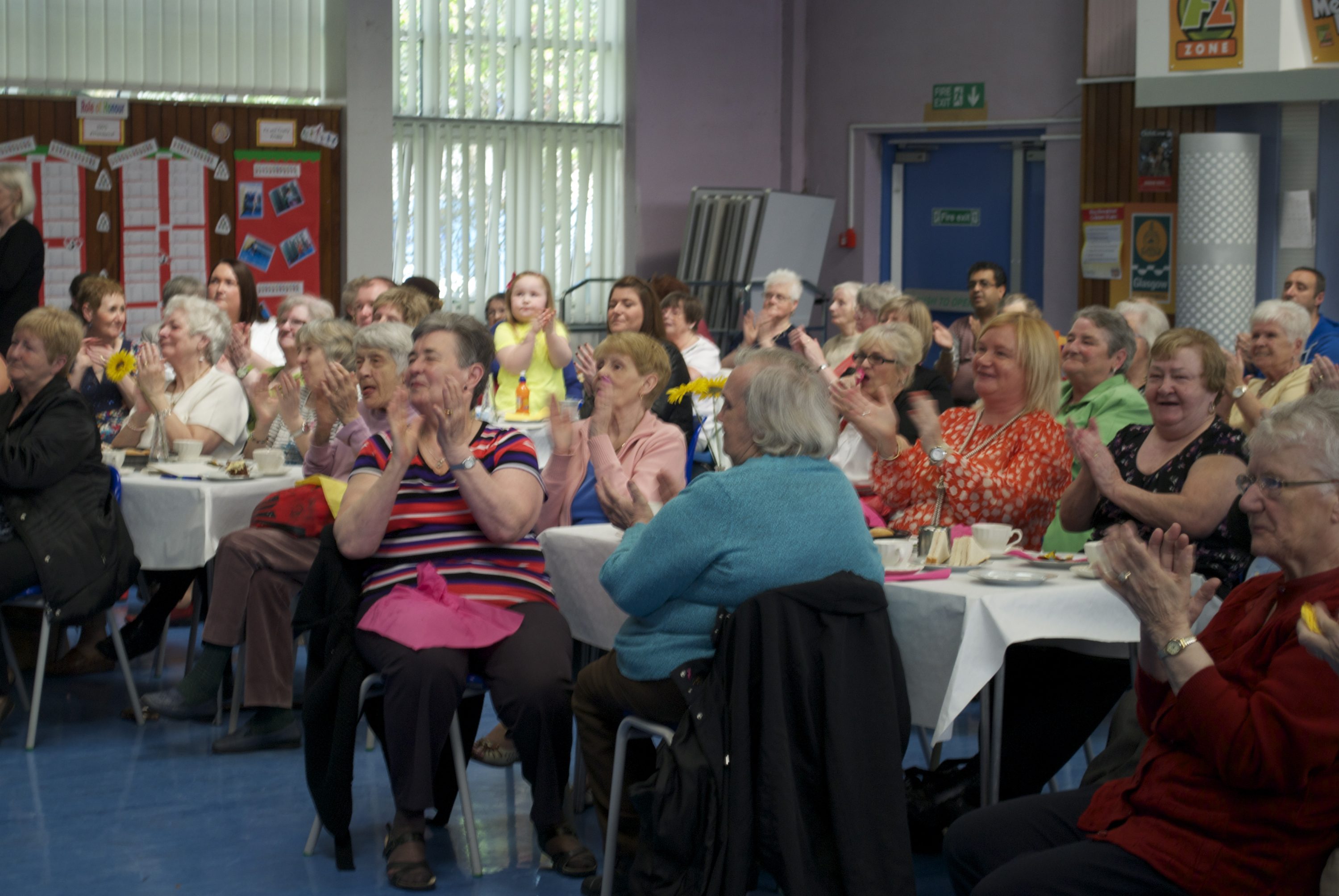
Monday was the student’s last opportunity to present formally to both people who use services and practitioners and to get relevant feedback on the concepts that respond to the project themes. This took place at the Dixon Community Centre on Cathcart Road to make it more likely that older people and their carers could share their thoughts, ideas and perspectives on the concepts. We also changed the timings of the presentation from a full day to an afternoon as we received feedback that it can be difficult for practitioners to negotiate Monday morning sessions.

The presentations

On the day 5 practitioners and 23 older people/carers were able to attend. Although the change of venue was aimed to integrate and include older people and carers views we learned very quickly that the formal presentation format we have been using each week wasn’t working in the hall due to the acoustics in the venue. In order to remedy this, we changed the format asking the students at very short notice to present (in rotation) to small groups of people who had attended. Although the noise level was still difficult to control, people were able to converse and hear better which afforded the students constructive feedback from those in each of the groups.

Anticipatory Care

The anticipatory care team have taken a different view of ‘anticipatory care’ and have defined the difference between ‘prevent’ and ‘anticipate’. Their idea takes a very broad view of anticipation that focuses on increasing awareness of ‘older life’ in younger and middle aged people.

Essentially, the approach is an inter-generational one, which aims to innovate policy as well as make practical changes on the ground in the local context. The crux of the idea is using schools as a place for meeting and introducing the topic of older life, to break down preconceived judgments and allowing young and older people to begin to associate one with another. This would be implemented through the Curriculum for Excellence and carried on into high school and university – with the range of activities being undertaken changing to suit ages and interests.

The idea is to create a partnership between schools and elderly community centres/projects, as a starting point to build values of respect and empathy in the community, as well as awareness of different health related issues.

The students have effectively linked their idea in to current policy areas including curriculum for excellence, prevention, education and community development. In addition, the idea also links in to what currently exists locally and seeks to complement it by making enhancements.

Partnership working and communication

This team has been working on their location based ‘hub’ idea which received positive feedback from the last session.

The hub idea is centred around the idea of peer to peer learning and support, based on the idea that people are experts in their own lives and that the collective knowledge of a community is a large untapped resource. Based within the hub is the ‘service expert’. This individual would be someone who acts as a first point of contact into the system – representing both health and social care. They are able to fulfill a number of different roles including making appointments, helping individuals to complete forms and also giving general advice and guidance.

However the key to the hub idea is that it is first and foremost it is an important part of the community providing services such as a post office, toilet facilities, pharmacy etc (a place to go for pensions, benefits and prescriptions). Its secondary role is as a base for well-being services and contact with the service expert.

The team has developed a manifesto and physical model to showcase their idea and are in the process of developing a business plan to accompany it – based on a social enterprise model.

Social Isolation

This team has come a long way since the last presentation – really beginning to drill down into the type of isolation that older people might experience.

Much of the teams thinking is based on their knowledge of different cultures as well as looking at historically how people used to have a sense of community cohesiveness and interest in one another. As such, the challenge for this group is to devise something that is implicit in its approach i.e. it doesn’t explicitly try to integrate people more into the community or activities, but rather, softly approaches the idea of linking people into areas of interest.

The idea being developed in this group is around the role of a community champion. The community champion would be someone who acts like a neighbour by looking out for older people in the community as well as informing the older people about different activities that are going on. The idea being developed was about this specific role, but also complementary tools that the individual would be able to use within that role.

For instance, the team had considered developing a database (that would be owned by the community) that would list the different resources, services and activities that were ongoing in the community. This could be used by the community champion (and others) as a signposting tool. This idea was really positively received by the group of older people and their carers – many of them commenting that it would be very useful to have access to a one-stop-shop of information about whats on in the local area. The focus group also gave the students a chance to talk to some real-life community connectors (!) and to focus their attention on the types of information they supply, how they get access to it, and how they transmit it to others.

The group still has to make some decisions about whether or not this role is volunteer based, or is paid for. Also, they are going to consider the type of skills, knowledge and aptitudes that the ideal community champion should possess.

Reablement

The reablement group had various different concepts that they represented two weeks ago and since then have narrowed these down to focus upon the idea of a reablement buddy. After looking at Edinburgh City Council’s review of reablement services as a basis for their ideas they are aiming to share the experience of someone who has  been through a service with someone who is about to enter a service; similar to ideas on the ALISS project and the Me2 concept from RED ‘s Diabetes project). However this group are still working out how this might work out in the South side of Glasgow – would it be a volunteer service? How would people be checked to make sure they wanted to support someone else  rather than talk about their own experience?

Interestingly the debate in this group between practitioners and cares was interesting. Practitioners wanted to make sure the buddies would have all the information and knowledge they needed to support a person, however the carers view was that a personal experience can be enough, and as well as learning from another experience of a service and navigating through it, it may possibly not not be as intimidating as a professional contact. Two different interpretations of who who is the ‘expert’ and how these perspectives could work together to better support someone.

One of the key points made by carers in this group was people ability to get to services or to other people as transportation can be difficult whilst in the process of enabling oneself.

Reflections

Overall, the feedback was positive for each of the concepts. Where views differed the conversation constructively contextualised the ideas to the South side of Glasgow, current experiences of services or how services are provided.

The teams have come a long way in terms of their understanding and vision, which really must be commended, given the tight time frame, new social and health sector learning as well as contextualising this within Glasgow. What is left now is to drill down into the ideas with specifics about how these concepts could be taken forward in practice – some of the teams are already underway with this task.

What I like is that the ideas build on one another and are complementary with the teams referencing ideas from other teams within their own concepts. Hopefully, this will mean that a comprehensive picture can be created for Glasgow south. Very much looking forward to seeing what comes next.

In terms of our reflections about the project, there are definitely things that we might have done differently with the benefit of hindsight. A future blog to come on this, detailing the benefits and challenges of undertaking a project such as this with some insights as to what the lessons IRISS have learned as facilitators.

Thanks

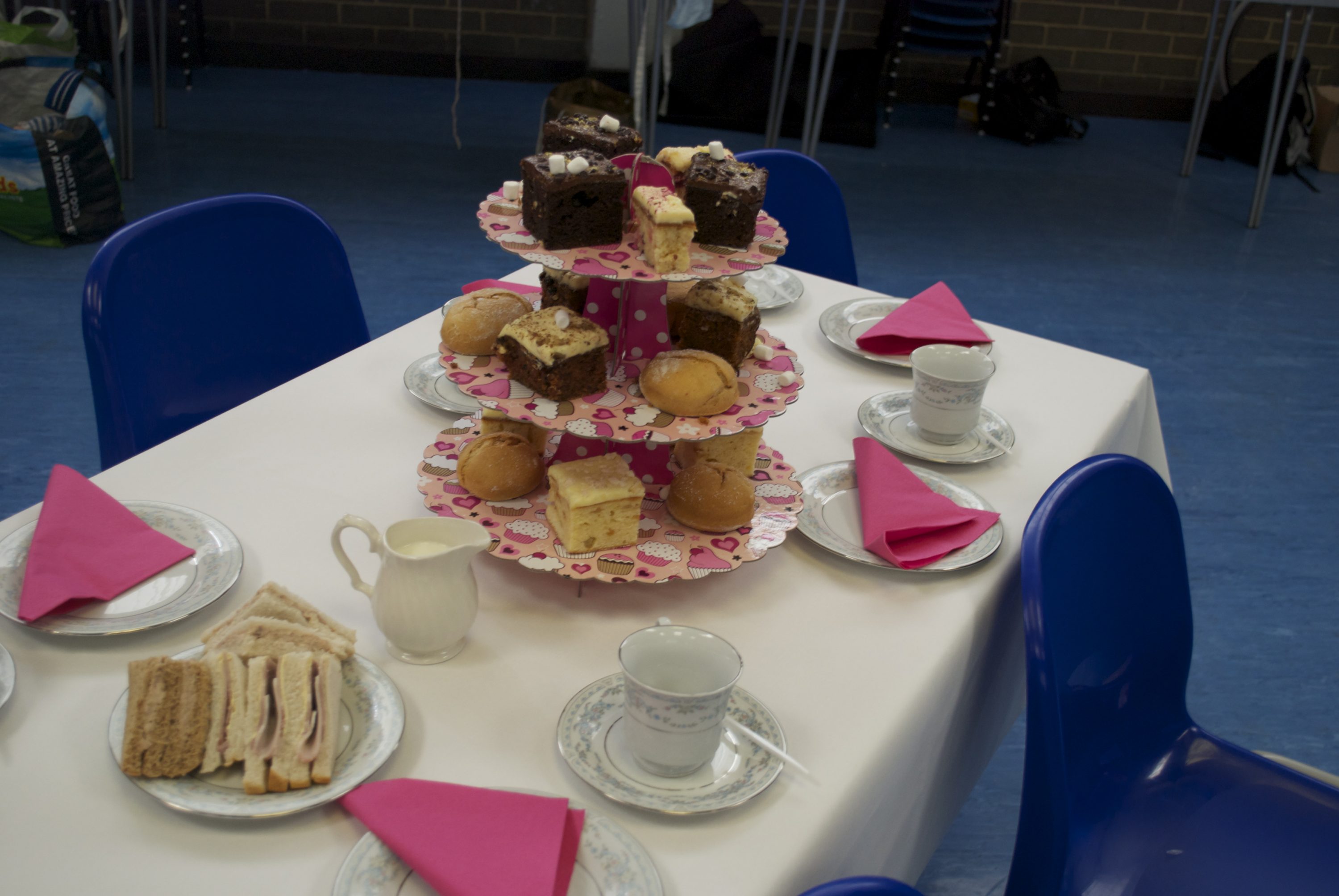
We’d just like to extend an extra thank you to our friends at Dixon Community Centre for the use of their venue, hospitality and all-round helpfulness. Also, we realise that it can be difficult to take time out of the caring role to attend events like these, and we really are thankful to all of the carers and older people who took time out of their day to help us with the project – your time, patience, sensitivity and sense of humour are much appreciated. The project would have far less meaning without your involvement.

One thought on “Student Presentations 14/11

  1. Hi Lisa
    Have only now had chance to have a proper look at this project: the students’ responses are so impressive, particularly given the complexity of the task and the short time-scale. Also great to see that ideas are being followed up. I look forward to reading more as the ideas come to fruition…
    Ruth

Leave a Reply

Your email address will not be published. Required fields are marked *

*

You may use these HTML tags and attributes: <a href="" title=""> <abbr title=""> <acronym title=""> <b> <blockquote cite=""> <cite> <code> <del datetime=""> <em> <i> <q cite=""> <strike> <strong>

Leave a Reply

Your email address will not be published. Required fields are marked *

*

You may use these HTML tags and attributes: <a href="" title=""> <abbr title=""> <acronym title=""> <b> <blockquote cite=""> <cite> <code> <del datetime=""> <em> <i> <q cite=""> <strike> <strong>

Leave a Reply

Your email address will not be published. Required fields are marked *

*

You may use these HTML tags and attributes: <a href="" title=""> <abbr title=""> <acronym title=""> <b> <blockquote cite=""> <cite> <code> <del datetime=""> <em> <i> <q cite=""> <strike> <strong>

Scottish Older People’s Assembly – debating key issues

Thought those who are following the blog maybe interested in this…

The Scottish Older People’s Assembly is a one-day conference is for older people and their representatives from across Scotland to debate key issues including active ageing, pensions and personal finance and reshaping care for older people.

The conference was webcast on 25th October 2011, this video includes presentations from Highland Senior Citizens’ Network and Dumfries & Galloway Seniors Forum plus a link to older people from House in the Park care complex in Hamburg, Germany as well as the main speaker Nicola Sturgeon MSP and Steve Webb, Minister of State for Pensions, speaking live from Westminster.

“…there will also be a written report to go to Scottish Government…”

http://twitter.com/#!/SOPA_2011

Leave a Reply

Your email address will not be published. Required fields are marked *

*

You may use these HTML tags and attributes: <a href="" title=""> <abbr title=""> <acronym title=""> <b> <blockquote cite=""> <cite> <code> <del datetime=""> <em> <i> <q cite=""> <strike> <strong>

Anticipatory Care team – Presentation 31/10

The project has been going for 4 weeks already and the last days were still very bouncing, with new insights and lots of new elements to think about. In addition to the meetings with a the GP and another rather smaller workshop with older people, we also had the chance to talk to a young man who is taking care of his grandfather. Along with insights from our practitioners (from volunteering and social care department), we alsodid some further research on the topic. We tried to find other inspirations about what exists in our own countries, how elderly and “older life” are shown in the media, the advertisement. We gathered examples of what has been already done in Europe in term of local community solutions, getting people moving together etc… And we noticed that lots of changes are actually occurring in local areas all around us, and that it really constitutes a rich source of inspiration, especially when we’re talking about reshaping the future choreography of life.
What we also figured out is that there are already many existing facilities in Glasgow South : associations, centers, charity foundations in diverse places.

Parallel to it, we enlightened that some old moral principles, fears and values are settled down in everybody’s mind for years. Cultural considerations, pride, lack of understanding from both sides, the young and the old, are mostly linked to the overriding message that gets communicated by the media, which increases the barriers to design an empathic society.

Comparing all these inputs, we decided to built our concept around the idea of bringing young and old people together.

As we define it in the previous presentation, our topic allows us to deal with a wide point of view on the situation and broaden the meaning of “anticipatory care” to “how to prepare yourself for the older life”.
We tried to keep in mind that doing design is also about re-thinking the entire system, looking beyond the traditional organization and re-interpreting the services, the resources and the role of the different stakeholders.

We finally came out with 3 concepts: a short term, a mid term and a long term solution. Our ambition is to reach out for the big long term solution. But to achieve this we have to build up a row of rather small solutions, step-by-step, to slowly adapt our concept. The purpose is to give the right starting point so that the concept can grow and develop by it’s own.

The ideas :
- advertising the older life
The aim is to create awareness in the whole society. Different campaigns in different evolutionary steps to fight against current media perceptions by relating to real persons through true inspiring stories. A way to give a voice to the older people and make the inhabitants realize that older people are everywhere around them.
- workshops involving various age groups
See the retired life as a time for investment in your most passionate joys in life. Giving the older people the opportunity to do what they always have been inspired by, to start something they want, and sharing it with younger generations.
- education concept
Using schools as a place for meeting and introduce the topic of the older life within the school curriculum, to break down preconceived judgments and allow young and old to begin to associate one with another. Create partnership between schools and elderly centre, as a starting point to build theses values of respect and empathy in the community.

We are now working at deepen these concepts, try to analyze thoroughly what is possible to do in the south of glasgow, using the existing resources. And also, propose a way to re-considerate the “risks” issues that came up again after our presentation, regarding the laws and policies of the system of today.

We’re open to as much feedbacks as possible !


PRESENTATION 31/10/11

3 thoughts on “Anticipatory Care team – Presentation 31/10

  1. I was quite interested in the intergenerational aspect of your idea. You might find the organisation below useful to talk to – or indeed, might find some useful material on their website.

    Scottish Centre for Intergenerational Practice

    http://www.scotcip.org.uk/

  2. As regards the intergenerational aspects, you may like to read the following pieces of research/work:

    Encouraging older people and children to mix
    http://lx.iriss.org.uk/content/encouraging-older-people-and-children-mix

    Youth action and engagement: building intergenerational relationships (National Youth Agency)
    http://nya.org.uk/dynamic_files/iyss/Youth%20Action%20and%20Engagement%20-%20building%20intergenerational%20relationships%20-%20May%202008.pdf

    The Children’s Society Intergenerational Service
    http://www.childrenssociety.org.uk/what-we-do/helping-children/participation/thanet-childrens-participation-project/intergenerational-s

Leave a Reply

Your email address will not be published. Required fields are marked *

*

You may use these HTML tags and attributes: <a href="" title=""> <abbr title=""> <acronym title=""> <b> <blockquote cite=""> <cite> <code> <del datetime=""> <em> <i> <q cite=""> <strike> <strong>

Initial concepts and ideas – Student presentations – 31/10/11

Initial concepts and ideas

Yesterday was the second set of student presentation at The Glasgow School of Art. The purpose of this session was for the students to present their initial concepts  in relation to their themes (social isolation, anticipatory care, re-enablement and partnership and communication). They were looking for feedback from practitioners, older people and and carers about how close these concepts are to creating the life older people would like, the suitability of the concepts in responding to the theme, and their practicality in the south side of Glasgow.

We had a full house of students, a few practitioners in the morning session and more in the afternoon. This meant feedback was limited in the morning and become more fruitful in the afternoon – reiterating that this project really is a collaboration/co-design project – without feedback and practitioners ideas and perspectives it is hard to evolve the concepts into relevant and practical ideas.

Work in the interm

Since the last presentations some of the students have been to visit the Nan McKay Hall where older people get together (see previous blog post), a GP at Midlock Medical Center, practitioners and older people at Cornerstone, and kept in touch with practitioners by email or phone.

Presentations

Each group presented and asked for feedback. We will make the presentations available on the blog asap so you can see the visual presentation of the concepts and how they would fit into a scenario that an older person may experience.

Social Isolation

The first group up was the social isolation group, they presented 3 ‘low technology’ ideas about engagement in the community when you are socially isolated, but are finding this a hard topic to address because it can be quite vast. Following this presentation this group are going to focus on narrowing the scope of the theme and develop concepts that respond directly to the older people’s profiles they have developed.

Furthermore, IRISS are providing some evidence support to assist the group in conceptualizing this issue – focusing on what the literature says about what is useful in overcoming social isolation and loneliness, what meaningful interactions might be as well as the use of technology.

View the presentation: 31_10_ Social Isolation

Anticipatory care

The anticipatory care group have decided to focus upon one area of anticipation – this being thinking, talking and being in contact with ‘old age’ in early years. This group believe that as a culture we don’t think about or anticipate our old age until it is imminent – this is not helped by poor representation of older people in the media and negative portrayals of older people as vulnerable, frail and isolated.

To address this, the group is interested in developing an awareness raising campaign,  which would include activities that bring older people and younger people together through primary and secondary school settings. The aim of this being to break down barriers around knowledge and appreciation of old age, as well as possible inhibitions and fear between these two age groups. This approach really pushes the perspective of anticipatory care back to when people are growing up and what young people want their life to be like when they are older. So although not addressing anticipatory care needs right now, this team are looking more at a futures and generational perspective so the problem experienced at the moment could be alleviated in the future.

Reablement

This group presented 7 concepts called:

  1. Swapping and sharing
  2. Reablement buddy
  3. House swapping
  4. Guerrilla gardening
  5. Audio recording
  6. Generation mixer
  7. Skills sharing

One of the things this group has found difficult is getting to grips with what reablement means in a health setting as we were unable to pursue access to older people who are working with the NHS to enable themselves due to time an ethical constraints.

Therefore this groups has focused on ideas with people who still need support but are possibly not at the acute end of this issue. As a result, most of their ideas are community based – a factor they are going to take into consideration when developing these ideas further (concepts are currently too close to the social isolation group).

View the presentation: layout pres. lunedi.2

Partnership working and communication

This group presented 3 concepts:

  1. Link -  referred to placing someone who has both health and social care knowledge in a GP’s surgery to act as a first point of contact and support a person to navigate the service landscape.
  2. Core team database – looked at combining the social work and health databases but making them person centered so that each person was able to have access and contribute to their records. It also considered employing a team of staff to make sure no one fell through the possible cracks between the two databases.
  3. The Hub – was the less developed of the three ideas but the one idea that most practitioners became quite excited about! The practitioners shared lots of ideas with the students as to what could be in the Hub, how it could work, and what would be there. The concept refers to a local area (hub) that people already use to go about their daily tasks – such as collecting their pension or buying food. The idea involves incorporating representatives from health and social work (or people with this kind of knowledge) than can signpost people to services that can support them or take them as these services would be in the Hub. What was stressed in this concept is that is is more of a community approach to people’s needs with health and social care a secondary (albeit important) element.

View the presentation: Concept_Ideas Partnership working and communication group

 Summary

All of the groups have taken a community perspective when developing these concepts rather than a health or social service based response. This chimes with the underlying approach which focuses on the inclusion of the experiences and aspirations of older people and carers -  it is these factors that the students are able to design for or towards, rather than the services expectations.

More work needs to be done by the students and practitioners to understand how the concepts could possibly complement existing networks, behaviours, actions or services and reconstitute them in some way. They also need to be made contextually relevant to the south side of Glasgow.

In the interim (2)

Ian Grout (the course leader) summarised and visualised how each of the theme’s concepts could sit together into a whole proposal for the future of care. The students need to consider this proposal and decide if they see their themes taking this kind of overall shape. As well as refining the concepts that gained positive feedback, they will work on the overall story of their ideas at the next group session on Wednesday.

 Next presentation

The next presentation session will be held in one of the cares centers the south side.

We are keen to ensure that people who use services and their carers are engaged in the project as much as possible – especially now that ideas are beginning to form. As such we hope that the change of venue will encourage as many people to attend as possible to provide feedback that will help shape and refine the concepts – and so that we can ensure that the concepts are of most relevance to the people that count the most – older people and their carers.


4 thoughts on “Initial concepts and ideas – Student presentations – 31/10/11

  1. Hi Everyone

    I was very interested in your presentation on Monday. You had a lot of information and I would like to look more closely when it is on the blog.

    I have since been thinking about your perspective of anticipatory care, and in particular the interpretation of care.

    I think that your idea of educating and integrating at a young age is very good. But is this care? In my ‘health-care’ world care comes at a later stage than this – at the time when a need has been identified. For us ‘anticipatory care’ for older people starts with identifying vulnerable and those ‘at risk’ of health difficulties.

    Interested to hear your views!

    Clare

  2. Re Partnership working and communication

    1) Think in general a problem would be staffing it, in the current financial climate and council tax freezes it is unlikely that a large number of new posts would be created unless it could be proved to be more efficient. Maybe would need pilot studies and staff reallocated from other duties?

    There are over 1000 GP practices in Scotland http://www.isdscotlandarchive.scot.nhs.uk/isd/5384.html. Link staff would likely have to serve more than one practice in dense city populations or cover a wide geographical area if based in a rural setting (The Scottish Highlands and Islands are particularly challenging). Think a segment of Social Workers would already consider themselves as the ‘link’ on acting as an advocate for the service user and liasing with various professions/services on their client’s behalf. There are already Social Service staff who specialise in e.g. Mental Health issues or assisting eldery people return to home or care after hospital stays so these kind of staff are already working very closely with the health system – maybe their experience would be helpful in forumlating new proposals for building on what works or what needs improving?

    2) Core team database. You’re rather assuming that ‘health’ and ‘social work’ have just one database each. Local Authorities in Scotland use different recordings systems. Health has a myriad of different systems e.g. Primary Care Mental Health may keep records just for the context of their involvement – GP’s cannot usually access this data electronically, information is only given by one to other professionals when the permission is granted by the service user or where they are at risk. There are very strong confidentiallity rules regarding patient data, so these would need to be considered in addition to any technical challenges involved in accessing the merged data.

Leave a Reply

Your email address will not be published. Required fields are marked *

*

You may use these HTML tags and attributes: <a href="" title=""> <abbr title=""> <acronym title=""> <b> <blockquote cite=""> <cite> <code> <del datetime=""> <em> <i> <q cite=""> <strike> <strong>